Posted on 1 Comment

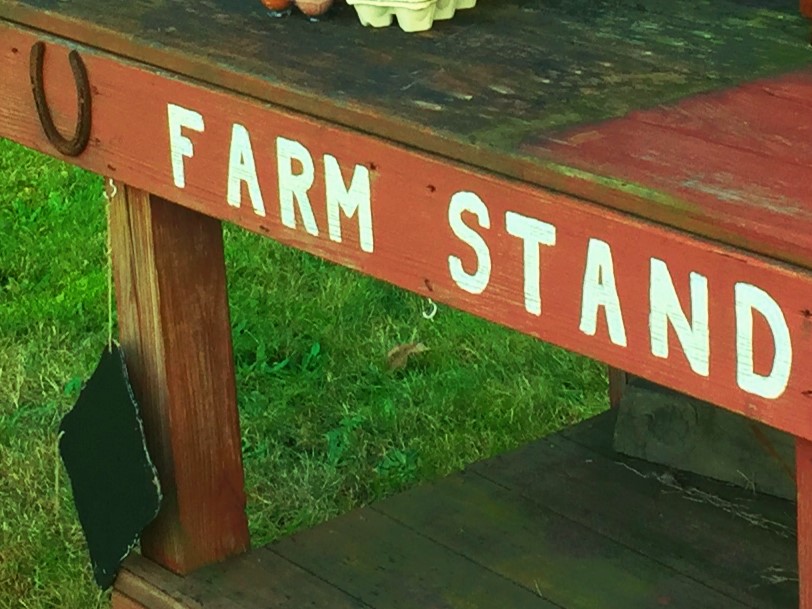
How do you define a farm stand?

Not by it’s food. Define a farm stand by the people.

The people who run it and the people it serves.

Don’t define a farm stand by its size.

A simple egg stand at the end of someone’s driveway and a sizeable mini-market attached to a commercial farm are both farm stands. Each connects neighbors to each other and reflects the way their communities live as well as the food they prepare.

farm fresh eggs at a neighborhood farm stand

A table set up at a farmers market is a farm stand. The market itself is a collection of farm stands. Each operator selects the seeds, the produce, the products to offer for sale to the community.

Food isn’t the only thing sold at a farm stand. Art, soap, flowers, and home dĂ©cor are all possible farm stand finds.

Mosaic garden stepping stones decor decorative farm stand find

Pay attention to what the people behind the stands choose to offer for sale (or give away for free). At first, the offerings give you insight on the personality of the grower or producer. Over time, the community will share ideas and recipes. The farm stand will start to reflect the people it serves.

You can learn a lot about the incredible variety of heirloom and hybrid fruits and vegetables that can be grown in small batches. Items that can be grown without the pressure of having to preserve it for shipping and appealing to a generic grocery produce selection.

You will learn a lot about how different cultures blended in a region based on the offerings at their local farm stands. You can get a sense of what’s missing in the big grocers in a community from looking at the selections of their micro-growers and small batch producers.

I am happy to draw attention to this amazing subculture. Farmstand culture.

Posted on 1 Comment

When it finally dawned on me

One day it dawned on me.

Looking at the food in my fridge, the eye cream on my nightstand, my modern life was coming full circle. I was striving to eat and live like my great-grandmother did 100 years ago on a farm.

color cook cooking delicious
Photo by Pixabay on Pexels.com

All natural. Farm fresh. Organic. Composted. Home-grown. Local.

The realization reframed the way I approached feeding our family, planting a garden, and choosing my skincare. For me, it sparked a step toward rediscovering farm stand culture.

Farmstand culture is all about the way communities were for millennia. Up until we radically changed and commercialized our approach to daily life, over the past 100 years, neighbors shared their garden surplus, and families ate fresh, homegrown food.

I’m not advocating for a total return to the past. Not really. Frankly, I am pretty happy with modern food supply chains and dental care, especially the dental care.

woman wearing eyeglasses
Photo by Tarzine Jackson on Pexels.com

Of course, it’s not all or nothing here. Embracing some of the best ways of the past doesn’t mean that we should throw away all of the ways of the present. We should choose the best approach, which is probably a blend.

Think about your own approach to living. Have you, too, found that your approach to daily life is a little more about fresh food and clean ingredients?

Posted on 4 Comments

Make Your Own Garlic Powder

garlic cloves in a basket at Off Center Farm Stand Woodbridge

Here’s a How-to that I recommend you don’t do. It sounds labor-intensive and smelly. Still, the impressive people behind the Two Branches Homestead went above and beyond in finding a use for extra herbs. You can learn more about all they went through to Make Your Own Garlic Powder

Posted on 8 Comments

Exclusive, easy farm stand recipe: fresh ground cherry salsa (with substitutes)

Ok, ok, I have already told you it’s hard to find ground cherries. Don’t be discouraged. You can substitute fresh or canned tomatoes or tomatillos for the ground cherries in this easy, quick fresh ground cherry salsa recipe. If you don’t like spicy food, you can use a sweet pepper or no peppers instead of jalapenos.

I hope you don’t see this recipe elsewhere in books or online. As far as I know, this one is really an original, my own masterpiece and a big hit with company!

Spicy Ground Cherry Salsa

Need:
food processor
1 pint ground cherries (substitute: tomatoes, tomatillos)
2-3 jalapenos (substitute: sweet pepper, no peppers at all)
2 small cloves garlic
1 small onion
handful of fresh cilantro
tablespoon sea salt
2 tablespoons ground cumin
Juice squeezed from 1/4 lime

Steps:
1) remove ground cherries from their husks and rinse under cool water

Washing ground cherries or husk cherries in a vintage colander in my farmstand sink

2) remove the seeds from the jalapenos

slicing jalapenos to remove the seeds on a cutting board

3) cut the onion in half or in quarters

slices of onion and garlic in a food processor

4) put all of the ingredients into a food processor and grind them into a salsa

Fresh salsa in a food processor with cumin salsa verde jalapenos ground cherries

5) taste, preferably with a tortilla chip, and add more salt, lime or cumin to your liking

Substitutes:
ground cherries => 1 large or 2 small cans of tomatoes
ground cherries => 1 pint tomatillos, you should cut these and cook them down a bit
jalapenos => nothing, you really don’t need them if you don’t like the heat
jalapenos => 1 sweet pepper

When you or your guests aren’t snacking on it, keep the salsa refrigerated.

The beauty of this recipe is how E-A-S-Y it is. Just throw everything into a food processor and serve. Ground cherry salsa chills well. The flavor gets richer and more delicious the next day. It keeps in the fridge for up to a week.

If you’ve been meaning to pick up a new food processor, here’s an option.

As an Amazon Associate, I earn from qualifying purchases. 

Removing the ground cherries from the husks takes 5 minutes, but I tend to do that while I’m watching tv. Then I leave the naked ground cherries in a bag in my fridge.

Using canned tomatoes, I’ve made this recipe in a few minutes with guests standing in my kitchen waiting for appetizers. Maybe it took me five minutes, but that would include running to the garden to get jalapenos and cilantro.

Need some other ideas for things to do with leftover herbs?

Posted on Leave a comment

Revealed! The stand that inspired me.

farm stand with a money slot cash only

Down the street and around the corner there’s a small, homemade farm stand. I’m sure most of my neighbors don’t think much about it.

The little stand is painted dark red with a blue umbrella. It has a brilliant little slot you can slip cash into on the days when there is even something there for you to buy. It’s not a new stand. It’s been there for years and years. They don’t stock it very often any more.

One night this week, they set out three recycled egg cartons and pushed up the umbrella. I had to stop and buy one. Not because I needed eggs, truthfully, I had two dozen at home. I stopped because this was the stand that started it all for me, and I had yet to actually visit it.

farm stand sign

I drive by this stand almost every day. Over the years, I started thinking about where the people behind the stand got the plans to design and build a custom farm stand with a money slot. What inspired them? Was it an abundance of produce or a desire to connect to their neighbors?

Why would anyone have a farm stand anymore? There are grocery stores and farmers’ markets in every town. There are very few, if any, neighborhoods left that need a farm stand to offer fresh eggs, produce or goats.

Yeah, goats. I’ll explain in a minute.

One night, I was driving home past this stand and the idea hit me. It’s only very recently that we stopped having a need for local farm stands. It’s sad, if you think about it. We don’t need our neighbors to share their saved seeds or host a “First Peas” party. We can go to the store and buy peas anytime. Just buy your seeds from Amazon. Done. Easy.

Maybe there is still some need for farm stands. Maybe it’s actually reemerging. It’s very personal to get to know the people who grow your food or make your skincare products. They will tell you what made them choose a certain variety or process. They’re not squeezing profits out of their operation. Some motivations are purer than profits.

goats for sale

Or maybe they just have too many goats. Occasionally, when there is an abundance of goats, they write “Goats for sale” on the little sign next to this farm stand. They don’t actually, technically sell goats at the farm stand. There’s never been goat milk or soaps available at this stand, but I’ve always thought the little goats for sale sign was adorable. It also highlights the variety of goods you can buy from your neighbors. We might think it’s a little funny to procure goats from a neighbor, but we might be the first generation in history to think that way.

I don’t know if I myself will ever have the flexibility in my schedule to open a farm stand. Writing for Farmstand Culture might be as close as I come. I’d be ok with that outcome. The name, the original series and the inspiration behind this site all began with a little red farm stand that captured my day dreams.

farm stand with goat sign

There aren’t enough items available at this stand to list the Top 5! But there were at these other farmstand5 hot spots.

Posted on 3 Comments

I did not know people did this. What is a yard walk?

Little kid walking on a trail in the woods

I wish I knew sooner about yard walks. It never even occurred to me that people did this, but when I did, I loved it.

Now, I owe my friend, Kaye, for introducing me to yard walks.

YARD WALK: a stroll around your own backyard with an expert in identifying herbs (and other plants), who can tell you the story behind the herb. Is it is medicinal, edible, toxic, native, invasive, infamous, or forgotten? It’s a good time. You should organize a party around it. 

Kaye bought a new house last year. Instead of inviting us to a pretty traditional housewarming and touring everyone through all the rooms on the inside of the house, she made her first get-together about the outdoors. Most of us can relate to her feelings about indoor tours causing too much pressure to paint and clean and unpack. Most of us have said, “Oh you gotta see the new place. Some time, when it’s ready, I’ll have you over.”  Instead of procrastinating and pretending like she would ever feel ready for a full-blown housewarming party, Kaye invited us to a yard walk at the new place.

There are so many interesting ‘weeds’ in your yard. If you don’t have a yard, there are interesting wild things growing in your flower pots, at the park down the street or between the cracks in your sidewalk.

As an Amazon Associate, I earn from qualifying purchases.

An experienced yard walker can stand in one spot and point to 12 different plants around you, identify them and tell their stories. Are they native plants or stowaways from some long-ago ship voyage? Can you eat them? Are they poisonous? Are they medicine? What did people do with them 200 years ago? Did we forget about them?

In 45 minutes of walking Kaye’s yard, I learned (and retained) as much as I have in some college courses. It reframed the way I looked at my own yard…

IMG_5870

Ok, that’s not my yard.  It’s Torrey Pines in San Diego. But it’s such a nice view. More about that later.

Many of us are looking for easy ways to connect with others, to spend time with friends or invest time in forming new friendships. We come up with ideas like bookclubs, guys nights out or cookie swaps. I recommend you add hosting a yard walking party to that list of ideas for get-togethers. Even if you or your friends are not nature buffs, it is an experience. It’s empowering to learn how to look at something that’s been hiding in plain sight your entire life and identify it.

20180825_193818469_iOS

The everyday weed in this photo is mullein. Up until the last 100 years, the leaves were brewed into a tea for sore throats. (Full disclosure, I did not see this one on Kaye’s yard walk, but I have some in my own yard.)

Problem: it’s not exactly like yard walkers advertise like lawyers. You won’t see their photo on the side of a city bus.

If you have a local university, botanical or garden center, that would be a good place to start. Many local agencies have departments that study native or invasive plants and may offer you some resources. Try the American Herblists Guild membership lists. They might not exactly have what you need, which is more like a wild plant ranger. You can do an online search for “wild herb walks” or “herblists” near you.

If you are lucky enough to have a nature center near you, they may offer foraging hikes or woodland discovery tours that are in the same spirit of a yard walk but lack some of the personal connection. I mean few things are as personal as getting acquainted with the hundreds of plant species growing in your own backyard or on your block.

Would you help me brainstorm other places to find experienced yard and herb walk guides?

Hey you. Me?

Yes, you, the person reading this article. If you can think of additional resources or you’ve been on an herbal or yard walk, please add a comments about it.

For the do-it-yourselfers, there are field guides you can buy. Peterson’s are popular, but I found myself squinting at some of the sketches not really sure if I was looking at an invasive or a native. Please don’t ever eat wild plants you are unsure of or if you don’t know whether they might be sprayed with pesticides.

When I was at Torrey Pines getting that photo pictured earlier, my family and I hiked the cliffs along the shore. While we were passing through the trails, I spotted some native wild sage. Not only could I identify it on sight, my proud mama moment was when my six year old spotted it and yelled, “Sage!”

Come on. How is that real life? But it was. Well done, kid.

———————————

If you want to learn more, visit my on-going series about forgotten herbs.


Posted on Leave a comment

Queen Anne’s Lace: Both Royal Diva and Outlaw

A beautiful article from The Herb Society of America about a pretty herb that most people probably overlook. Add some Queen Anne’s Lace to any flower arrangement. Snap the stem and breathe in the delicate scent of wild carrot, a cousin to the bigger roots you might eat with humus.

Posted on 5 Comments

Forgotten herb: chicory

Wild chicory blue flowers wildflowers

Imagine it is April 24, 1862.

You live in New Orleans, Louisiana, and set out on a beautiful Thursday morning to go pick up a copy of the local newspaper.

If you are a lover of fine hot beverages, you were about to have a really disappointing day. In fact, the day’s headlines likely made you think, “Oh darlin, we may never taste coffee again.” (You have to read it with a Southern accent.)

Oh well, you knew this day would come. There were Union blockades of the shores all around the south. You heard the bombs and gunfire, but on that day in April, the boys in blue were more than near your shoreline. They had captured the city, and no more coffee was getting through those lines.

If you’re an optimist, your second thought would be, “I’m going to find an alternative.”

Allow me to reintroduce you to chicory.

Unlike some of the less-invasive forgotten herbs, you’ve probably been around chicory your whole life without really noticing it. Do these little blue flowers look familiar?

ChicFull.JPG

Chicory is not native to the US. If you lived in Europe or with someone who did, you might already know all about using chicory in coffee. One of my French roommates absolutely craved it. It was in her blood as the French have a long history with chicory coffee, too. They also experienced a war-time blockade that pushed them toward the need for an alternative hot beverage.

To be fair, there are other varieties of chicory, most of which you might have know as different types of endive or Italian dandelions. Their roots can be roasted into coffee alternatives as well.

Even though Europeans introduced chicory seeds to the US during colonial times, the nation-wide spreading of the wildflower is a direct result of the American Civil War negatively affecting the availability of tea and coffee in the divided country.

Back in the day, the plant was widely cultivated in private gardens. When it was mature, the root was dug up, roasted and ground into a brewed hot drink, an alternative to coffee. It’s not really a thing of the past. Some Americans still prefer the flavor of coffee blended with roasted chicory root. Je te regard…I’m looking at you, CafĂ© du Monde.

As an Amazon Associate, I earn from qualifying purchases.

Chicory is not a wildflower at all. It’s an escaped prisoner. Much like my experience cultivating chives, chicory was just not well-behaved. It busted out of our ancestors’ garden centuries ago and now stretches its roots along highways and roadsides in pretty much every city in the US.

One more thing, that might just split the audience here…chicory is caffeine free.

Chicory wildflower blue flower blooms

I hope you enjoy these articles.

You can read about more forgotten herbs in the on-going series.

Posted on Leave a comment

Quick Tips: Buying Safer Cosmetics — The Natural Beauty Blog

My favorite thing about this post from The Natural Beauty Blog is the link to EWG’s Skin Deep Cosmestics Database. When I started making my own skincare from farm-fresh ingredients, I got really into reading cosmetics labels. That said, I would and do still buy some skincare products that are mass-produced. I’m not judgy about it. My favorite face scrub is Biore right now, and I only use it a few times a week. Still, I thought this was worth reposting. It gets you thinking about the topic a little bit.

As an Amazon Associate, I earn from qualifying purchases. 

It can be overwhelming trying to figure out how to buy safe cosmetics and skin and body care products. There are so many ingredients to avoid, things to learn, and different ways to you choose healthier products for your body.

via Quick Tips: Buying Safer Cosmetics — The Natural Beauty Blog