Posted on 2 Comments

Forgotten herb: clary sage

A year one clary sage plant growing in my organic backyard garden

There can only be one reason we forgot about clary sage: modern pharmaceuticals.

close enough pronunciation “clare-E  sayjuh”

Clary sage was THE go-to herb for our female ancestors to reduce the monthly discomfort of menstruation cycles. Your great-grandmother probably looked forward to the relief of a cup of brewed clary sage tea as she busied around the house.

But, we still forgot an herb that half of our ancestors likely used on a monthly basis.

The scent is like a deeper, more woody lavender. In soaps, lotions and diffusers, clary sage smells great blended with lemon or black pepper.

As an Amazon associate I earn from qualifying purchases.

Don’t get me wrong. It is not a ladies-only herb.

You can use clary sage in recipes like its cousin, garden sage, the better-known complement to pork and risotto dishes. The famous herbalist, Nicholas Culpeper, wrote about using wild English clary to flavor beer and wine in 1653.

clary seedling.JPG

I grew my clary sage from seed within a raised garden bed, which actually seems almost cruel. The plant stretches its stems like arms with big, leafy hands. As my clary sage grows, it seems to try to escape the confines of the bed.

It is a really beautiful plant. If you like big, broad leaves with interesting texture, you should consider growing this in your garden. The leaves have a soft kale-like appearance, and the stems are a rich, deep rose-purple. Clary sage can even join your regular landscaping. It is a biannual in most parts of the US and would be beautiful along a walkway or mixed in between grasses.

clary up close2.JPG

Over the years, I developed an appreciation, maybe almost a preference for biannual plants. There is something special about a plant that only appears for two years and reinvents itself each time it greets the growing season.

In year one, you can expect your clary sage to feature stunning wide leaves. In year two, it will flower as long as it’s in a sunny location. If you let it go to seed, it will pretty much reward you with a life-time supply.

clary plant

Culpeper had some unusual ideas about clary seeds. Unlike him, I do not recommend putting them in your eyes. Given my past experiences, I think it would be much better to clip the towers of flowers and tuck them into a vase for a powerful floral and herbal display.

Posted on 1 Comment

Best 5 items at Killam & Bassette Farm Stand, Hartford, CT

August 7, 2018

K&B’s farm stand always has really fresh fruits and veggies and so much variety. It was particularly tough to narrow down this farmstand5 to just my self-imposed limit of five choices.

The Killam & Bassette Farmstead is actually in South Glastonbury, CT. The location listed here is for one of their mobile farm stands at the Old State House Farmers’ Market in downtown Hartford. It’s small but still one of the oldest farmers’ markets in the country, established 1643.

K&B farmers have personality. You’ll spot them right away in their tie-dye shirts.

Debunk the myth that you need cash at all farm stands. K&B accepts major credit and debit cards, too. Naturally, I overspend every time I visit them.

#5
Scallions

KB scalions

Add them to stir-fries, rice dishes, omelets, soups, salads (I recommend miso dressing), or make my Aunt-in-law’s most popular hors d’oeuvre, scallion pancakes. They have a light oniony flavor and are a good option for people like my mom who think onions have a “weird texture”. For the record, I am not one of those people.

#4
Italian flat beans

KB long beans

The more you visit farm stands, farmers’ markets and CSAs (community-sponsored agriculture), the more you will appreciate the vast and interesting variety of beans in this world. How is it that we can go our entire childhood and only eat green beans in America? The only variety I knew growing up was yellow wax beans or haricot verts (close-enough pronunciation “airy-co-vare”, yes, the “h” is slient). It wasn’t always this way. Thomas Jefferson grew a wide variety of beans. Beyond the culinary uses, he favored the color and flowers they contributed to the aesthetic of his gardens.

As an Amazon Associate I earn from qualifying purchases.

#3
Broccoli

KB broccoli

One of the top favorite veggies in my household, broccoli. Boil it in sea-salted water, and it’s ready to serve. At the Killam & Bassette farm stand, I found fresh broccoli. It is not as easy to grow as my other choices so K&B deserves extra bonus points for taking on a more fickle vegetable.

#2
Hot peppers

KB hot peppers

Not everyone can take on my #2 choice. In fact, I used to be one of those people who avoided spicy foods. Until…my second pregnancy, when I craved spicy food every day. It is funny how our tolerance for hot stuff ebbs and flows during our lifetimes. Now, the see-through compartments in my fridge look a little like this basket, full of different kinds of hot peppers for my morning omelets and homemade salsas.

#1
Ball zucchini

KB round zucchinis

Before visiting this farm stand, I did not know zucchini grew in balls. Now, I plan to grow them in my garden next year. For the past thirty years, I only thought of peppers when I wanted to stuff and bake a veggie. But these zucchini balls can be hollowed out and stuffed with your favorite stew, rice, potato, meat, casserole or cheese concoction. For a fast, impressive and practical Thursday night dinner, make a stuffing using all of the leftovers from the week. Just cook them in a saucepan with some herbs, chicken or vegetable broth.

I hope you are having fun and learning, too. Did you see this farmstand5 post?…

Fancy’s Farm Stand, Orleans, MA

Back to farmstand5 full list.

Posted on 7 Comments

Worst gardening mistake I ever made

Don’t read this post. It will ruin the whole illusion for you. Right now, as far as you know, my garden grows weed-less. My flowers are always crowned with a glistening morning dew. My local farm stands always have lush offerings, and my hair always holds a perfect curl.

Why are you still reading?

Ok, fine.

I brought it on myself, really. It’s not like I don’t know what happens when seeds fall into soil and water lands on them.

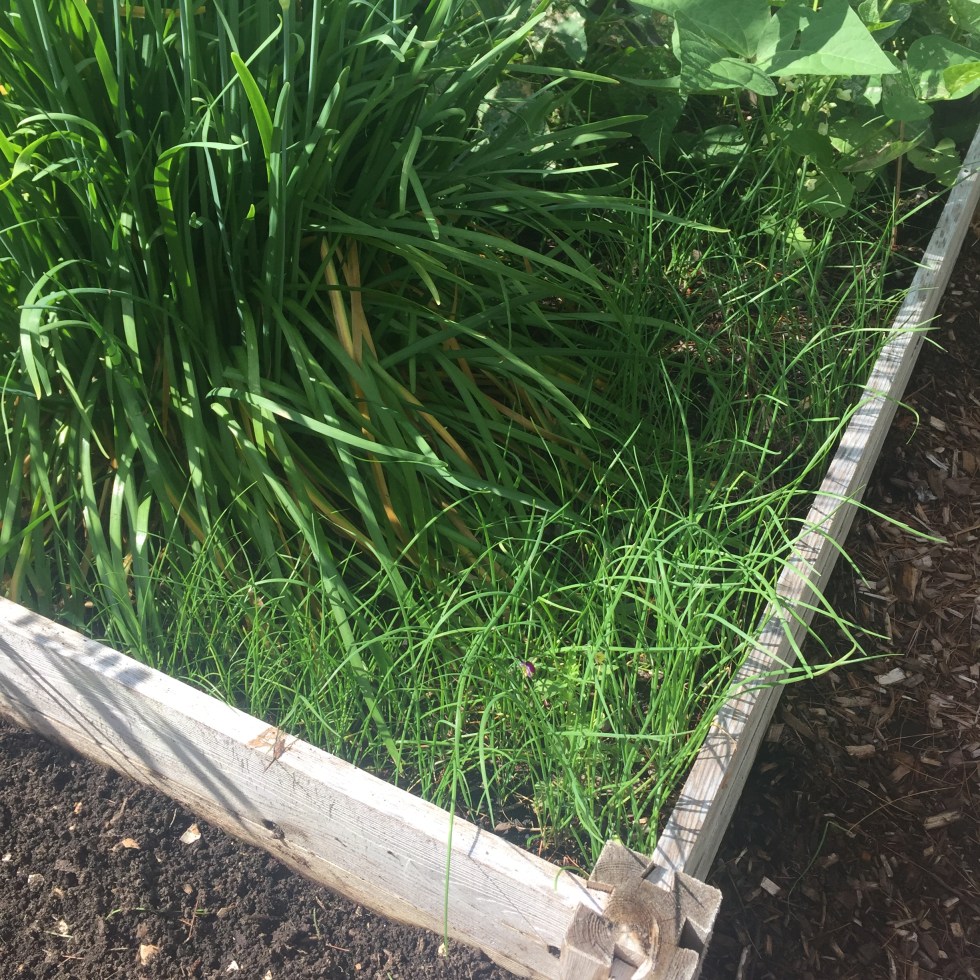
Last year, I had a beautiful chive plant. It grew nearly 4′ tall and blossomed snow-white flowers. Those flowers were the trendiest new bar in town for my neighbor’s honey bees. We were all so happy. Me, with my beautiful flowering chive, and the bees with the nectar.

chives stepped back

In fact, those flowers were so pretty, I let them stay in bloom in September.

And since there were a few late bloomers, I didn’t cut them down as they went to seed in October. Oh wow, did that chive plant know how to make seeds.

We were in the middle of a major renovation of the first floor of our farm house, which is probably why I got lazy. I never did go back and clear out that dry, seedy chive plant.

And those seeds went everywhere.

Boom. Seedling explosion.

The following Spring, roughly 10,000 baby chive plants sprung up all around my garden. It was intense. A 4′ diameter around the momma chive blanketed with her hairy little babies.

chives wild.JPG

Tough little suckers, too. I could pull and tug. Those seedlings just snap in half and grow a stronger, chunkier root ball.

I spent some time digging around the garden bed with my bare hands to pull up the chives. Maybe, I got 8,000 of them. Mostly I just gave up and planted some hearty green bean seeds in the bed with the chives. Figured some sturdy, little green beans would be capable of bursting through the chive forest. And they more or less did.

I’d like to say that if I could go back in time I would cut down those pretty white flowers before they caused me trouble. But, I probably wouldn’t. Circumstances being what they were. My family knee deep in construction debris, and me spending my evenings shimmying between towers of moving boxes to microwave frozen burritos.

Update! How I fixed it

After following a cycle of sprout-pull-resprout for a summer season with those chive seedlings, I was able to clean out the chive bed. In the early Autumn, I went in and dug through that bed with my bare hands. First, I pulled everything out that wasn’t a chive. Then, I went inch-by-inch through the garden soil, driving my hands below the surface, feeling for chive roots and lifting them out completely.

An half-hour later, there was a pile of little white chive root balls and green shoots in our compost bin. My back ached for two days, but I got a great leg and shoulder workout. I suspect there will be a few more chives to pull out next season. I’ll be ready. Of course, that would mean that letting one plant go to seed one time cost me two seasons of work to undo.

Oh well, only time will tell if the chive baby bomb retains its place as the worst mistake I ever made in the garden. But for now, champion crowned.


Posted on 2 Comments

Forgotten herb: Nasturtiums

Close-enough pronunciation: “Nah-stir-shums”

Spicy little things and tough too.

I wouldn’t be surprised if you have heard of this one. It probably puts you in the 1% of Americans who have, but it’s not completely erased from memory.

And now, some actual statistics. According to Google Trends (as of September 2018), you are most likely to have searched for nasturtiums if you live in…Alaska! Fascinating.

Nasturtiums are most popular in Alaska and Maine according to Google Trends
Nasturtiums receive the most searches in Alaska (source: trends.google.com September 2018)

It does require a little patience to grow nasturtiums. I don’t often see them at nurseries. They don’t transplant well, but it will save you time and money to grow nasturtiums yourself from seeds. I buy one cheap packet of seeds every Spring and place them all over my yard.

As long as you are patient with the little sprouts, nasturtiums grow well from seed, which might mean getting your hands dirty. But, if you are willing to plant them yourself, you will save a bundle over buying seedlings. You do need some patience. The seedlings are straggly for a little while.

Nast leaf.JPG

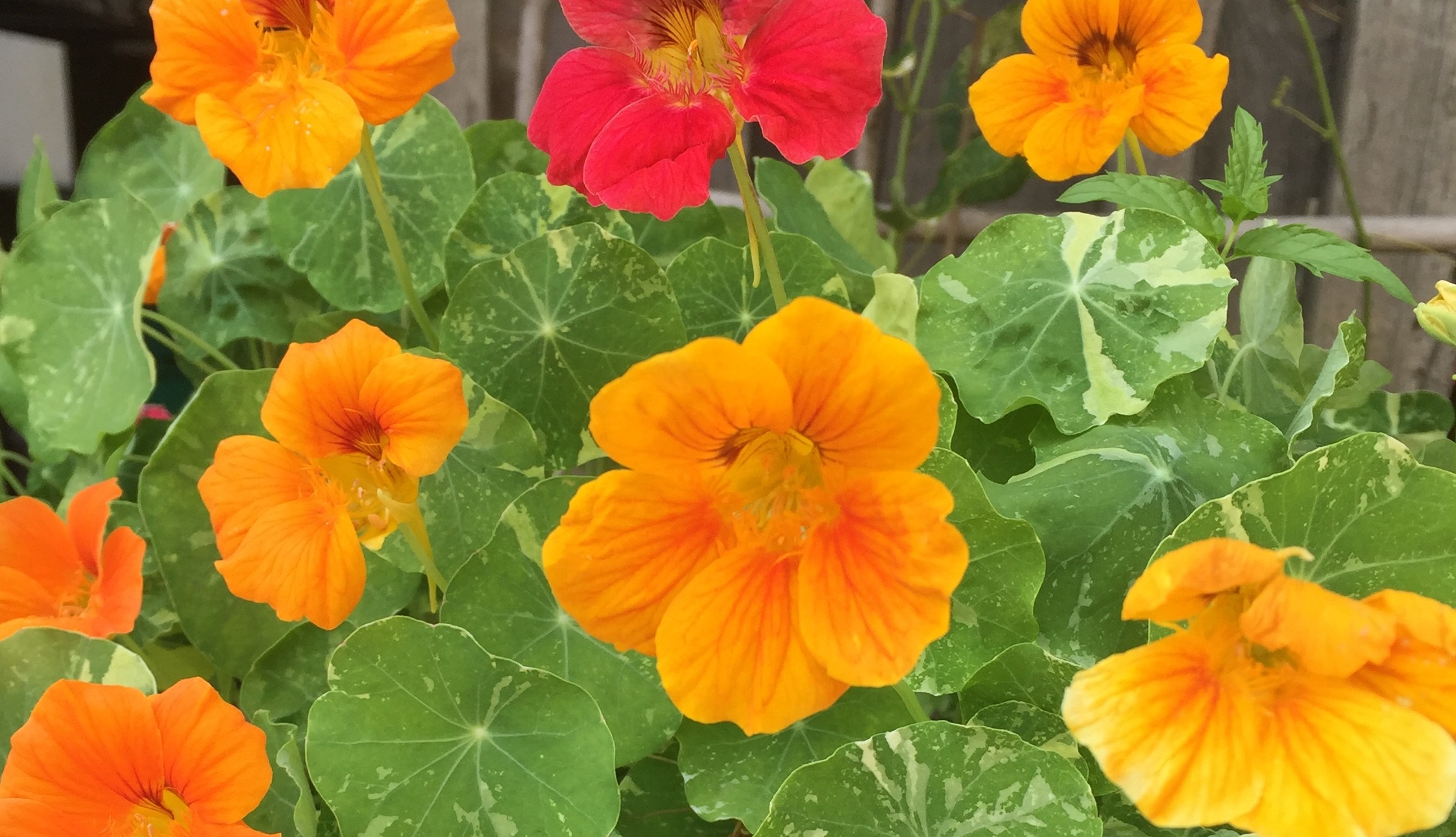
When they finally mature and start to bloom, the flowers are abundant. The colors are absolutely bright and brilliant. Keep scrolling for a stunning display of the wide variety of nasturtium colors you can find online.


As an Amazon Associate I earn from qualifying purchases.

You can eat the flowers and the leaves. The flavor is spicy. They make beautiful butters and add a peppery bite to salads. The leaves and flowers can be brewed into tea. Peppery tea. I think I’d have fun mixing fresh nasturtium tea with complementary flavors, like lemon, orange and lavender.

One of the best characteristics is the sturdiness of the flowers. These blooms might look like tissue paper, but they are surprisingly long-lasting in an arrangement.

For the perfect impression and an affordable alternative to orchids, pick a bowl full of nasturtiums and place one bloom on each plate just before your guests arrive for brunch. You can use the leaves as garnish for hors d’oeuvres and platters.

My grandmother, Peg (born 1929), loved nasturtiums. Her sons could identify the plants on sight. Proof positive that we only started to forget this herb recently.

I was on vacation when she passed away in 2016. In my grief and the confusion to pack up and get home asap, I forgot to send flowers to the funeral home. I had a wonderful grandmother who adored her flower gardens, and I…forgot…to…send…flowers…to…her…funeral. Ouch.

It’s not that there weren’t any flowers there. My parents and relatives ordered beautiful, big arrangements with sashes on them: Mother, Grandmother, Aunt, Sister. But, when I arrived at the wake and realized there was nothing from me to her, I felt hollow.

The afternoon before her funeral, I was wandering through the garden in search of some peace and calm. It was mid-August. My nasturtium vines were covered in blooms. What a saving grace.

I picked about 20 flowers and honored Gram’s Irish heritage with a beautifully-simple, hand-gathered arrangement: one big lime-green hydrangea circled by orange and white nasturtium flowers.

Thanks to offcenterfarm.com for letting me take photos of her beautiful variegated nasturtiums for this article.

verNast3

As promised, here’s a display of some of the stunning colors in the nasturtium rainbow.

As an Amazon Associate I earn from qualifying purchases.


View the whole forgotten herb series.

Posted on Leave a comment

Best 5 items at Hollister Farm Stand, Hartford, CT

Hollister Farm truck fruit produce greenhouses North Granby Connecticut at the Hartford Farmers Market

August 7, 2018

Hollister Farm is actually in North Grandy, CT, but I tend to visit their mobile farm stand at the Old State House Farmers’ Market in downtown Hartford. It’s the oldest farmers’ market in Connecticut, est. 1643.

On Fridays, the Hollister farm stand usually has a great spot right next to the band that plays in front of the old stockade. A legit stockade.

I have personally enjoyed my #1 pick from Hollister’s for several years. Really, one of my finds from this farm stand has lived for two years on my window sill. How old is your oldest farm stand find? If you know, leave the answer in a comment.

#5
Yellow plums

Yellow plums from the Hollister's farm stand at the Hartford Farmer's Market

If you follow my posts, you already know how exciting it is to find fruits and veggies in surprising colors. Purple plums are great. I have nothing against them. My great-grandparents had a purple plum tree. There’s just something special about discovering something so ordinary in an extraordinary color.

#4
Tomatoes with timing

Holl colorful tomatoes

Just in case you aren’t going to eat all of your tomatoes today, Hollister’s offers tomatoes that are still ripening. SO thoughtful. Buy a standard red, ripe tomato and a semi-ripe marbled one for later in the week. In a sunny spot, green tomatoes would ripen to red over time. If you bring some home and decide you can’t wait that long? Fry them up!

#3
Tumbling eggplants

Holl eggplant.JPG

I love how these eggplants just tumble out of this basket. It’s like they’ve leaped on stage for their big debut and are screaming, “Look at me! Take me home.” If you weren’t going to peel them, you’d have to pick through them a bit to find one with perfect skin. Your ancestors would all think that was funny, by the way. As if fruits and veggies were supposed to all look like a perfectly painted picture. Reconnect with your roots.

#2
Summer sweet corn

Holl corn

I once had a French roommate who had never eaten corn on a cob. Corn, yes, but never just thrown into a pot and boiled right on the cob. It’s such a farm stand staple in the States. Corn on the cob is one of the first items I remember buying from farm stands when I was a small child. The kernels actually burst with sweetness. These did. Delicious!

#1
Potted plants (featuring my favorite, aloe vera)

You don’t have to go to the big box store to find seedlings for the garden or houseplants for the window sill. In fact, when bugs, pets or kids take out one of my garden plants mid-season, I am known to visit this stand and replace it. The rosemary and basil in this photo went right into one of my raised beds.

I love aloe. My personal aloe plant came from the Hollister farm stand and has been living happily on my window sill ever since. Outdoors in warm weather; indoors in cold weather. It barely needs any water. Aloe vera plants are champions. Plus, succulent collections are trendy right now.

As an Amazon Associate I earn from qualifying purchases.

Did you see this one?…

Fancy’s Farm Stand, Orleans, MA

Back to farmstand5 full list.

Posted on 4 Comments

Forgotten herbs: Borage

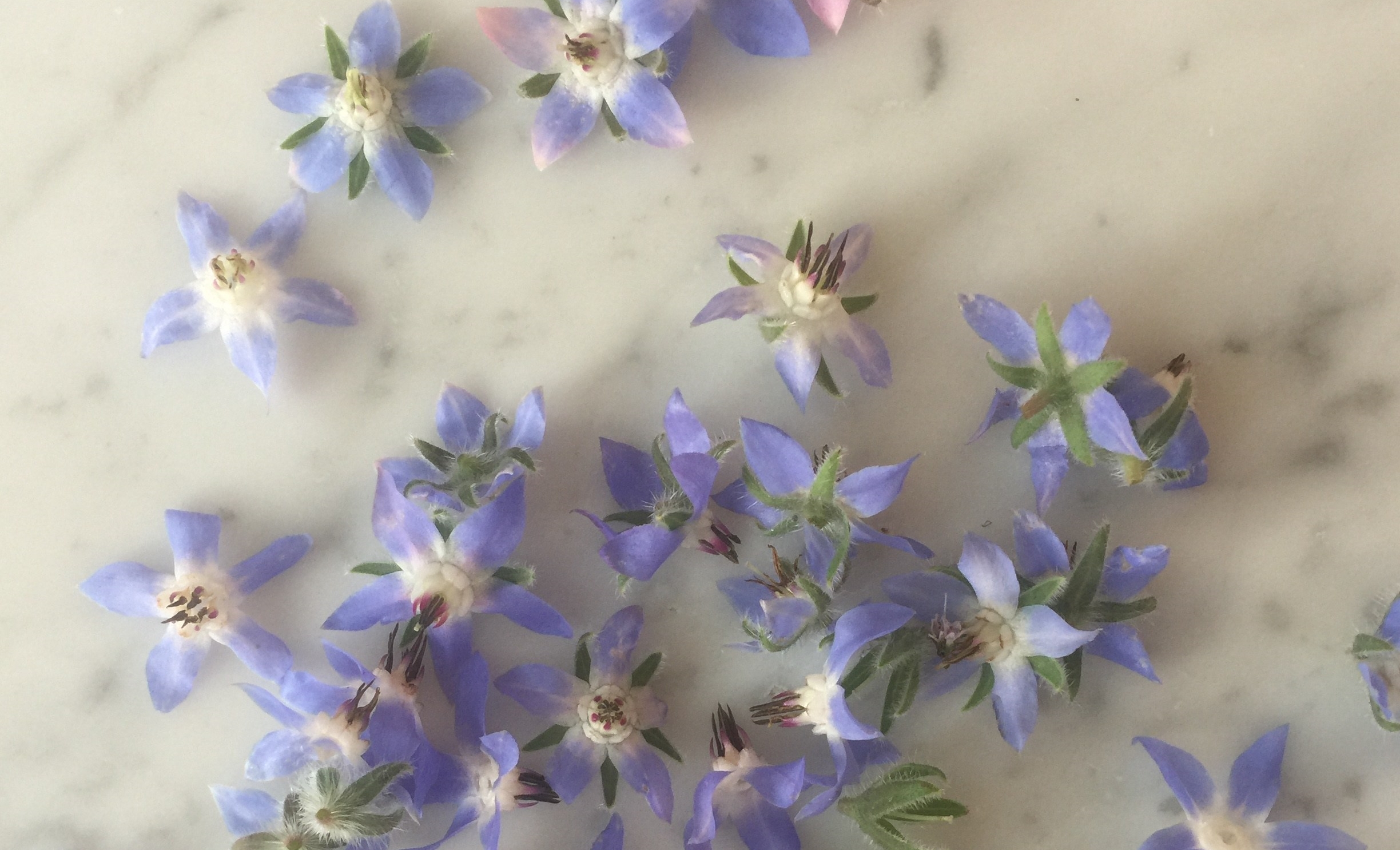
Borage flowers blue purple pink on white marble countertop forgotten herbs

Borage flowers on porridge oatmeal breakfastClose enough pronunciation: “Bore-uhge”

Other than my gardening hat, there is another obsession in my farm life—blue flowers.

Borage will give you a blue-flower fix all summer long. It is a tall, impressive plant that is easy to grow. And, when it sets too many baby seedlings, it is easy to weed.

borage weeding.JPG

The seeds from the borage flowers can be pressed into an oil that is among the world’s best sources of Omega-6 (GLA) essential fatty acid. I love this luxury oil so much, I incorporate it into all of the soaps I make. You can buy a bar here:

Handmade soap

Borage was definitely an herb your ancestors knew well. It didn’t take me long to find a two-page description of different types of borage in a book published in 1636. Besides Latin, the author, John Gerard, gave the translation of the word borage in four other languages.

Borage is versatile. You can use the crunchy leaves to make salad, soup and decorative garnishes. Throw a few of the unique blue flowers on top of any salad—pasta salad, fruit salad, veggie salad, borage-leaf salad. Borage bits are often recommended as an addition to cucumber salads. The leaves and flowers have a light cucumber flavor.

Few breakfasts are as precious as borage on porridge.

20180825_164608562_iOS

I don’t want to mislead you. Not every flower will be blue. Some borage flowers are purple and pink. The same plant will usually give you 80% blue flowers and 20% a mix of pink and purple.

purple-borage-on-stool1

The plant barely needs you. Any time between March and August, put the seeds in the ground. Water them if it doesn’t rain. Your borage should flourish.

If you start early enough in the season, the flowers will bloom and drop, reseeding themselves all summer without your help. In fact, your borage will likely continue to replant itself, and next Spring you’ll have more bright, green borage babies. Too many? They slip right out of the soil if you pull them. Or you can use a garden tool to destroy their sprout-like root system in seconds.

Since borage reseeds so effortlessly, it helps to start your very first planting in a spot where future generations can spread a bit and not annoy you.

I let the borage line one whole side of a cedar raised bed. They are tall plants—reaching a height of approximately 4′. It is best to locate borage near the north side of your garden. You don’t want the tall, leafy mature borage to block sunlight from shorter plants. The next Spring, I just drop a wooden plant marker next to the seedlings wherever they decide to pop-up.

img_5549


Posted on 4 Comments

Best 5 items at Roses Berry Farm Stand, Hartford, CT

August 24, 2018

Sometimes I write about favorites. And please, do let me know in the comments what your favorite farm stands are! Rose’s Berry Farm Stand is my current favorite.

If you know of Rose’s, you might be confused as to why a farm that is in South Glastonbury, CT, is listed here as Hartford. I go to their stand on Fridays at the Old State House Farmer’s Market.

What makes Rose’s Berry Farm Stand my current favorite?

#1 – variety, #2 – kind people #3 – freshness (OH! a bonus top 3 inside this farmstand5)

#5
Dinosaur kale (aka Lacinato kale)

rb-dino-kale

My little boy asked me recently what was the best vegetable for you. I told him the darkest, greenest vegetables are the best. Dino kale might fit that bill. The second reason it’s my #5 pick is that it is the toughest, thickest kale for making baked kale chips at home.

#4
Colorful raspberries

rb-two-color-rasp

It would be hard to feature a berry farm and choose their berries for a top picks list! What I liked so much about these raspberries is that you could buy them in a rainbow. My kids usually have fruit with breakfast. We like to make a rainbow design—it’s fun for them to eat-by-the-bow and after the dark-green stuff, the most colorful fruits and veggies are great for your body.

#3
Collard Greens

rb-collards

There are few things I like more than stewed collard greens. Hey, I’m not the only one. Right before I bought a couple of bunches of these fresh, strong collards, the lady before me bought the entire display, and the farmer had to go to his truck to find me more. It’s a good sign when such a healthy veggie sells out fast!

#2
Rainbow carrots

rb-rainbow-carrots

Talk about eating your rainbow. Cue the rainbow carrots. Rose’s Berry Farm does a great job of growing long, straight colorful carrots. If you aren’t too familiar with the purple, pink, white or yellow versions of your favorite orange veggie, you should try them because they are fun and look so pretty in soups, salads and baked dishes. But—and you can disagree in the comments—if I’m totally honest, I think the orange carrots still have the strongest, best flavor.

#1
Ground cherries (in Latin: Physalis pruinose)

rb-ground-cherries

Ground cherries are my #1 pick because they represent one big reason to shop farm stands. Treasure hunting! It was exciting to find these little golden, berry-like relatives of tomatillos. You can peel back the delicate husk and eat them like grapes. Make a salsa, add them to salads (fruit or veggie-based salads). Basically, anything you can do with a tomato, grape, or berry, you can do with a ground cherry. More bang for your buck!

Did you see this one?…

Fancy’s Farm Stand, Orleans, MA

Back to farmstand5 full list.

Posted on 8 Comments

Forgotten herbs

Dried calendula flowers diy for oil infusions and healing herb salve

Imagine your great-grandkid never hearing the words mint or parsley or sage?

Well, in a way, you are that great-grandkid. I am that great-grandkid.

As chain grocers and supermarkets opened stores all across the world, they favored plants that travelled well. Over time, we simply forgot about a large number of herbs and veggies that were so common generations before us took them for granted.

Funnier still, you drive by some of them all of the time and might not know it. Some of those old-time, common plants escaped your ancestors’ gardens and are now called by the same generic term, “weeds”.

clary plant

But, all is not lost. In this series I want to take you back to a time when the herbs mentioned here were well known.

ChicClose

Explore the series on Forgotten Herbs.  I hope you try an idea or two. Each of the pages will provide you with links to buy some seeds of your own. Maybe we can bring back the popularity of some of these herbs.

Forgotten herb: borage
Forgotten herb: nasturtium
Forgotten herb: clary sage
Forgotten herb: calendula
Forgotten herb: chicory
Forgotten herb: balsam apple

Follow me on Instagram @farmstandculture for more photos of #forgottenherbs

Posted on 1 Comment

Best 5 items at Longnook Meadows Farm Stand, Truro, MA

July 28, 2018

On the last day of our summer vacation, we followed a small sign off Route 6 that lead us to the Longnook Farm Stand.


#5
Fresh basil

basil-v-2

You know the basil is fresh if it hasn’t started oxidizing (aka turning black). The leaves on this basil were perfect. It had been picked with care.

Bonus tip: to help keep your basil looking green longer, coat the leaves in oil, stack them, roll them up and slice with a sharp knife.


#4
Coffee

coffee v.2

Wait, they didn’t grow this coffee. I know, but it’s still a good idea. When I first saw this coffee for resale at this neighborhood stand, I shrugged off including it in a farmstand5. But then I started to warm up to the idea. farmstand5 is about showcasing variety. The family who runs the farm found something they liked it so much, they offered it to their customers. That resonates.


#3
Red leaf lettuce

redlettuce v.2

I keep coming back and staring at this photo. Just a simple head of lettuce leaves trimmed in beautiful purple hues. Makes me want salad with dinner!


#2
Thai garlic

longnookgarlic

Some extra effort came into play to bring this garlic to the farm stand. It had to be harvested and cured before it was ready to be placed in its basket for sale. Thai garlic is special. It gives your dishes a spicy kick.


#1
Native honey

honey-v-21

Talk about special, this farm stand offered self-branded local honey. As our vacation comes to an end, I love the idea of bringing home a little bit of Cape Cod. It will bring back happy memories every time we open the jar.


View next…

Rose’s Berry Farm Stand, Hartford, CT

Back to farmstand5 full list.